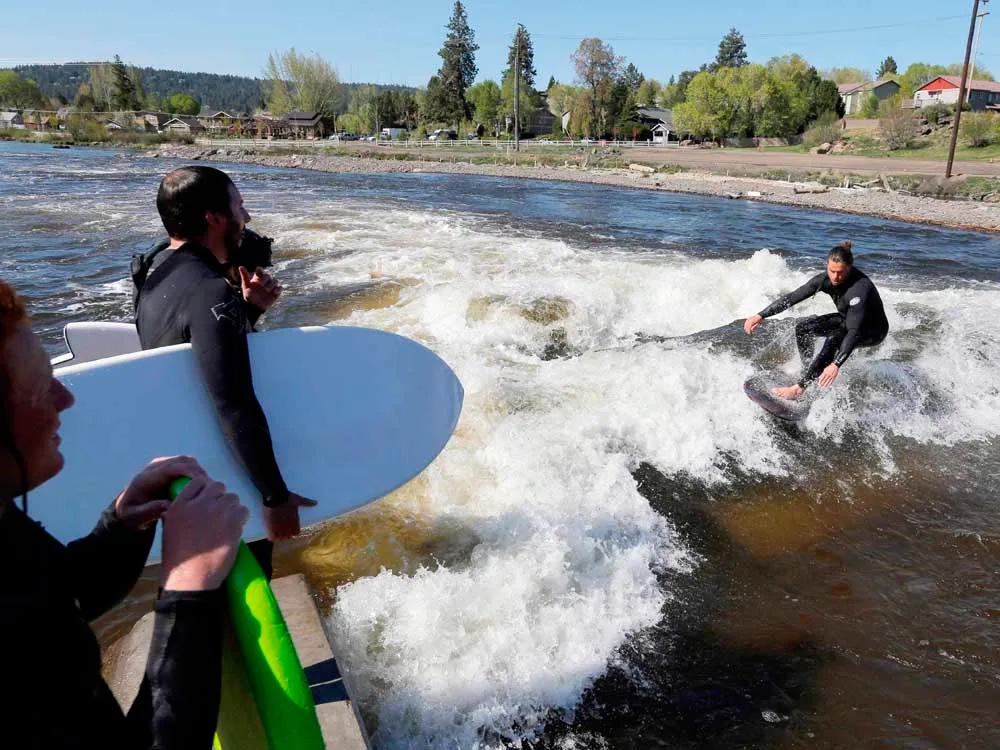
Reno's downtown river feature β its history, where it stands today, and what our community is asking the city to support.
Built and maintained by Alex Badgett Β· a Reno river surfer
Wingfield Whitewater Park opened at the heart of downtown Reno in 2003, designed by Gary Lacy, P.E. of Recreation Engineering & Planning (REP) β one of the country's most experienced whitewater park firms, with dozens of similar features designed across the West.
Before the park went in, the stretch of the Truckee River through downtown was largely underused. The park became an anchor for the transformation of the district that followed: new restaurants, riverfront housing, hotels, and the year-round activity that a working stretch of river brings.
For most of the next two decades it hosted the Reno River Festival β at its 2019 peak drawing an estimated 55,000 attendees over two days, one of the premier river festivals in the country β and it drew a daily community of surfers, kayakers, tubers, and spectators.
Two decades on, the community's endorsement is undiminished: the 2025 Wingfield & Barbara Bennett Master Plan community survey ranks Wingfield as the #1 park in Reno, with 39% of respondents placing it in their top five.
That legacy is what this site is about: telling the park's story, being honest about the challenges it faces today, and helping the community move it forward.
Wingfield Whitewater Park opens. Designed by Gary Lacy, P.E. / REP.
Reno River Festival grows into a nationally recognized event, peaking at ~55,000 attendees over two days in 2019. Downtown district transforms around the park.
Flood events deposit sediment throughout the north channel; Drop 5 tailwater control structure is displaced, creating a dangerous hydraulic.
Arlington Bridges reconstruction begins; park closes for the project; the Reno River Festival is displaced to Idlewild Park. $2.6M Drop 2 rebuild is completed β but the dewatering window closes before the associated channel maintenance can be finished, and a subsequent flood washes construction debris into the pools.
Arlington Bridges project completes and Wingfield Park reopens. Gary Lacy presents a maintenance memo to the Reno Recreation and Park Commission with a phased plan to finish the whitewater features.
The park is open again, but the new Drop 2 wave isn't yet functioning as designed. Community is organizing around three concrete asks to the City of Reno β starting with a volunteer sandbag fix that can make the wave surfable this season and bring the festival home.
Wingfield Whitewater Park was designed by Gary Lacy, P.E. of Recreation Engineering & Planning in 2003β2004. For two decades it was one of Reno's most beloved public amenities β and home to the Reno River Festival. Here's what's happening now.
High-flow events deposited sediment throughout the north channel pools, filling eddies and drowning out Drop Structures 3, 4, and 5. The downstream tailwater control structure at Drop 5 was significantly displaced β turning a safe wave feature into a dangerous recirculating hydraulic that can capsize and retain watercraft or swimmers.
The Reno River Festival β which peaked at ~55,000 attendees at Wingfield in 2019 β was displaced to Idlewild Park for the 2025 and 2026 seasons while the Arlington Bridges reconstruction closed the park. Now that the park is open again, the wave still doesn't perform as designed β so the festival hasn't yet come home.
The Arlington Bridge replacement project included agreement to reconstruct Drop 2 ($2.6M completed in 2025) and perform the channel maintenance while the north channel was dewatered β a window that would have saved significant cost and disruption.
The channel maintenance wasn't finished before the dewatering window closed. Then a flash flood washed out a cofferdam, depositing additional construction debris β cobbles, boulders, and sandbags β into the pools, creating additional hazards.
The pool downstream of the new Drop 2 was also not shaped to the correct hydraulic elevation, meaning the $2.6M structure does not function as designed.
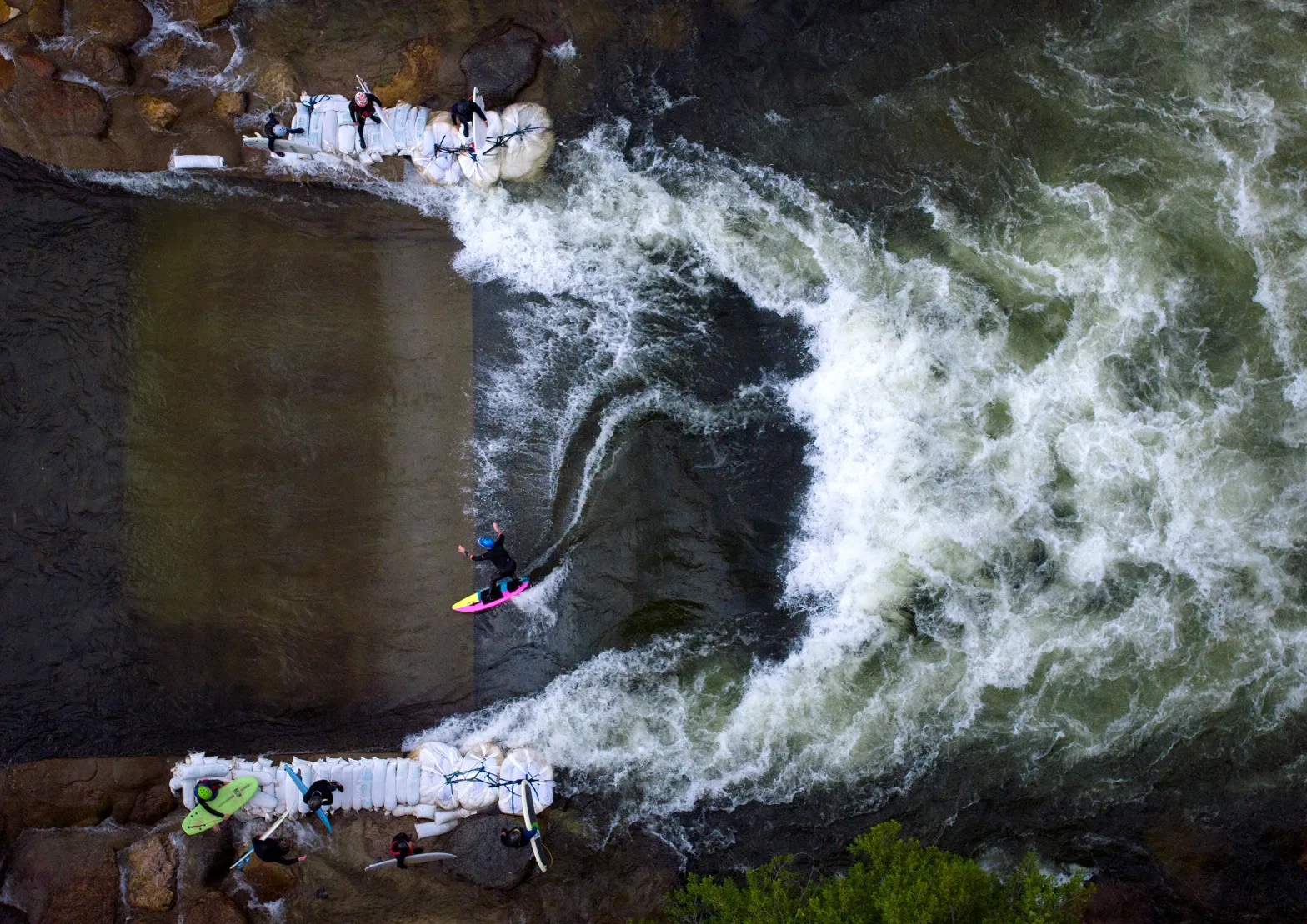
The original designer recommends placing temporary sandbags/super sacks at the downstream tailwater location of Pool 2 to bring it to the correct hydraulic elevation. This allows the new Drop 2 structure to function as designed this season β and it also deepens the pool below the drop, which addresses the shallow-water safety hazard for swimmers.
This work will be completed by volunteers at no cost to the city. The ask to Parks & Recreation is simply: direct staff to support approval and execution of the volunteer effort. Volunteers are signing up here β
The full maintenance plan β excavating accumulated sediment from pools below Drop Structures 3 and 4, restoring the Drop 5 tailwater control structure, and upland path improvements β was designed by REP, presented to the Parks Commission in January 2025, and funds were already approved.
This work qualifies under a general maintenance permit. The design is complete. It just needs to be executed.
Drop Structure 5 currently produces a dangerous recirculating "plunging" hydraulic rather than the original wave-type feature. This can capsize watercraft and be retentive to swimmers. With limited river exit points downstream, recovery is difficult. The original designer's recommendation explicitly cites public safety as the primary reason this restoration is urgent.
Additionally, the pool below the new Drop 2 wave is too shallow β swimmers coming through the drop at high velocity are getting beat up on the streambed. Raising the tailwater with sandbags is the fix for this issue too, which is another reason the sandbag work is the priority.
Wingfield Whitewater Park isn't a speculative new project. It's a 20-year-old asset with documented community value, designed by one of the country's leading whitewater park engineers, that has been degraded by circumstances outside the community's control β flood events and an interrupted maintenance window during the bridge project.
The Reno River Festival, held annually at Wingfield Park through 2024, grew into one of the premier river festivals in the country β peaking at ~55,000 attendees over two days in 2019. Organizers moved it temporarily to Idlewild Park for the 2025 and 2026 seasons while Wingfield was closed for the Arlington Avenue Bridges reconstruction. That project wrapped in June 2026 and the park has reopened β but with the new Drop 2 wave still short of its designed performance, the festival hasn't yet come home. The event drove hotel stays, restaurant spending, and national visibility for Reno β and it can come back to Wingfield as soon as the wave works.
The case for investing in Wingfield Park isn't theoretical. A community-produced July 2026 economic impact estimate projects $1Mβ$15M in annual economic activity to Washoe County across the three priority tiers β with the volunteer sandbag fix alone worth an estimated $1Mβ$4M/yr. Reno already has the infrastructure. The maintenance is designed and funded. The sandbag fix costs the city nothing.
"The Park has been an incredible public asset, recreationally and economically, for over 20 years."
β Gary Lacy, P.E., Recreation Engineering & Planning, Inc. β June 16, 2026 memo to the Reno Recreation and Park Commission"Before that whitewater park went into the river, the area was completely different. You look at it today and it is thriving with businesses, residential development, restaurants, and a beautiful park."
β Sara Arkle, Director of Parks & Recreation, City of Boise (Marketplace, January 2026)"It is probably one of the single best investments in the Bend area ever when you think about the return on the investment."
β Mark Buckley, outdoor economist, on Bend Whitewater Park (Marketplace, January 2026)These are documented impacts from similar whitewater features β what Wingfield Park was already doing, and what it can do again.
Transformed an area of gravel pits and empty lots into a thriving district. Local surf community grew from dozens to 1,000+ riders. Reno's Wingfield wave predates Boise's by nearly a decade β Reno was an early leader in the urban surf movement.
Credited with "starting the transformation of downtown Golden." Similar parks in Vail ($1.8M/yr) and Breckenridge ($1.4M/yr) confirm the pattern: whitewater features drive foot traffic, spending, and neighborhood investment.
University of Idaho study: 20,000 visitors year 1, 50,000 year 2. 25% came specifically for the park. Generated ~$600K in economic impact for a small town β primarily campgrounds and restaurant spending.
Home to the GoPro Mountain Games kayaking events and a popular Tuesday night race series that draws regional competitors β proof that a whitewater feature paired with a strong event calendar can define a town's summer identity.
A brand-new park projecting 137 permanent jobs and $1.6M in annual local tax revenue. Received a $4.9M federal EDA grant. If a new park in Maine can project these numbers, a 20-year established park in a city of 3.8M annual visitors should easily match or exceed them.
Three concrete asks, in time order β from an immediate volunteer-led fix, to near-term improvements the city can fund at low cost, to a long-term commitment that prevents this from happening again.
The original designer recommends placing temporary sandbags/super sacks at the downstream tailwater location of Pool 2 to bring it to the correct hydraulic elevation. This enables the already-rebuilt Drop 2 wave to function as designed β and deepens the pool below the drop, resolving the shallow-water safety hazard for swimmers.
City ask: Direct staff to support approval and execution of the volunteer effort. That's it.
The park needs clear, thoughtful signage that helps everyone use it safely and understand what they're looking at. This is one of the lowest-cost, highest-impact improvements available β addressing water safety, water quality, and the environmental design of the park at once.
City ask: Fund and install a coordinated signage program, developed in partnership with the surf and paddling community.
The reason we're in this situation is that no recurring maintenance cycle ever existed. A 20-year-old public asset with millions of dollars invested deserves a formal maintenance plan β the same way roads, playgrounds, and pools are maintained.
Step one β execute the funded 2025 maintenance project. Designed by REP, approved and funded by the Parks Commission in January 2025, and qualifying under a general maintenance permit:
Step two β establish a recurring maintenance program so the park never degrades to today's state again:
City ask: Execute the funded maintenance work, and commit β in writing and in the budget β to an ongoing maintenance program for the park.
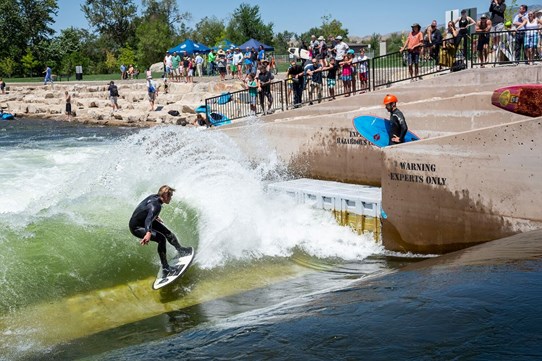
Those three priorities take real work β volunteer time, city attention, budget. Here's what makes Wingfield Park uniquely worth it: infrastructure already built, a walkable downtown right at the water's edge, and a river that behaves better than almost any comparable site in the West.
All drop structures are structurally sound as originally designed. The $2.6M Drop 2 rebuild is complete. The issue is pool grading and accumulated sediment β maintenance, not construction.
Gary Lacy, P.E. β the park's original designer β produced complete maintenance plans approved and funded by the Parks Commission in January 2025. No new engineering study needed; the sandbag pilot is volunteer-executed at zero city cost.
Sitting on the island at First Street and Arlington Avenue, every visitor drawn to the park steps directly into downtown Reno's restaurant, hotel, and retail district β maximizing economic multiplier effects.
Reno-Tahoe welcomed 3.8M+ visitors in 2025 β 64% for vacation. A restored, functioning Wingfield Park gives this audience a compelling free activity within walking distance of downtown.
Lake Tahoe's regulated outflow keeps Truckee River flows more stable than most comparable sites, providing a long, predictable season from early summer through fall. Worth a closer look β
Lake Tahoe's regulated outflow gives the Truckee more stable summer flows than most comparable river sites. Analysis of the full USGS daily record (site 10348000, water years 2007β2026) shows a median of 233 days per year in the wave-favorable 300β1,500 CFS band β with water year 2025 alone hitting 362 days.
| Season | Typical CFS Range | Conditions | Notes |
|---|---|---|---|
| Spring (AprβMay) | 800β2,500+ | Variable / Powerful | Peak snowmelt; excellent for advanced paddlers |
| Early Summer (Jun) | 400β1,000 | Excellent | Prime window; warm, consistent, high participation |
| Summer (JulβAug) | 200β600 | Good β Very Good | Tahoe regulation keeps flows stable; main season |
| Late Summer (Sep) | 150β400 | Good | Sandbag tailwater control most impactful here |
| Fall (OctβNov) | 100β300 | Marginal | Possible with optimized tailwater control |
Source: USGS Water Data for the Nation, Station 10348000 β Truckee River at Reno. CFS ranges are approximate historical averages.
These are working examples from cities that invested in their rivers β the same investment Reno already made the hard part of, and just needs to finish.
These documents form the basis of the case for immediate action. The engineering is done. The plan is approved. The funding exists. And the economic case is now documented.
Community-produced directional estimate Β· July 2026 Β· Projects $1Mβ$15M in annual economic impact to Washoe County across the three priority tiers, with every input cited and every assumption documented
Prepared by Gary Lacy, P.E. β Recreation Engineering & Planning, Inc. Β· June 16, 2026 Β· Presented to the Reno Parks Commission
History, FAQs, wave schedule, and phase information for a comparable downtown whitewater park in Boise, ID
Methodology and findings for quantifying economic impact of whitewater park development; used nationally as a reference model
Live and historical CFS data for the Truckee River at the Wingfield Park site
Community organizers are building a committed list of volunteers ready to help place sandbags at Pool 2 the moment the city gives the go-ahead. No experience needed. A few hours of work near downtown directly makes the existing wave surfable and fixes the shallow-pool safety hazard at the same time. Sign up below.
The Parks Commission heard the maintenance memo on June 16. The ask to the city is simple: let volunteers place sandbags, authorize staff to help, and complete the maintenance project that's already designed and funded.
Beyond volunteering, we're building a list of supporters willing to attend future Parks Commission meetings. Turnout tells the city this matters.
Community study, July 2026 β $1Mβ$15M projected annual impact across the three priority tiers
Gary Lacy, P.E. Β· June 2026 β share with friends, neighbors, and councilmembers
We'll ping you when volunteer days, commission meetings, and other coordinated action opportunities come up β so your effort lands where it counts
Optional β helps cover time spent keeping this site up to date
Priority ask: get on the sandbag volunteer list. We'll also reach out with commission meeting dates and other easy ways to help.